.svg)
.svg)


.svg)
.svg)
.svg)



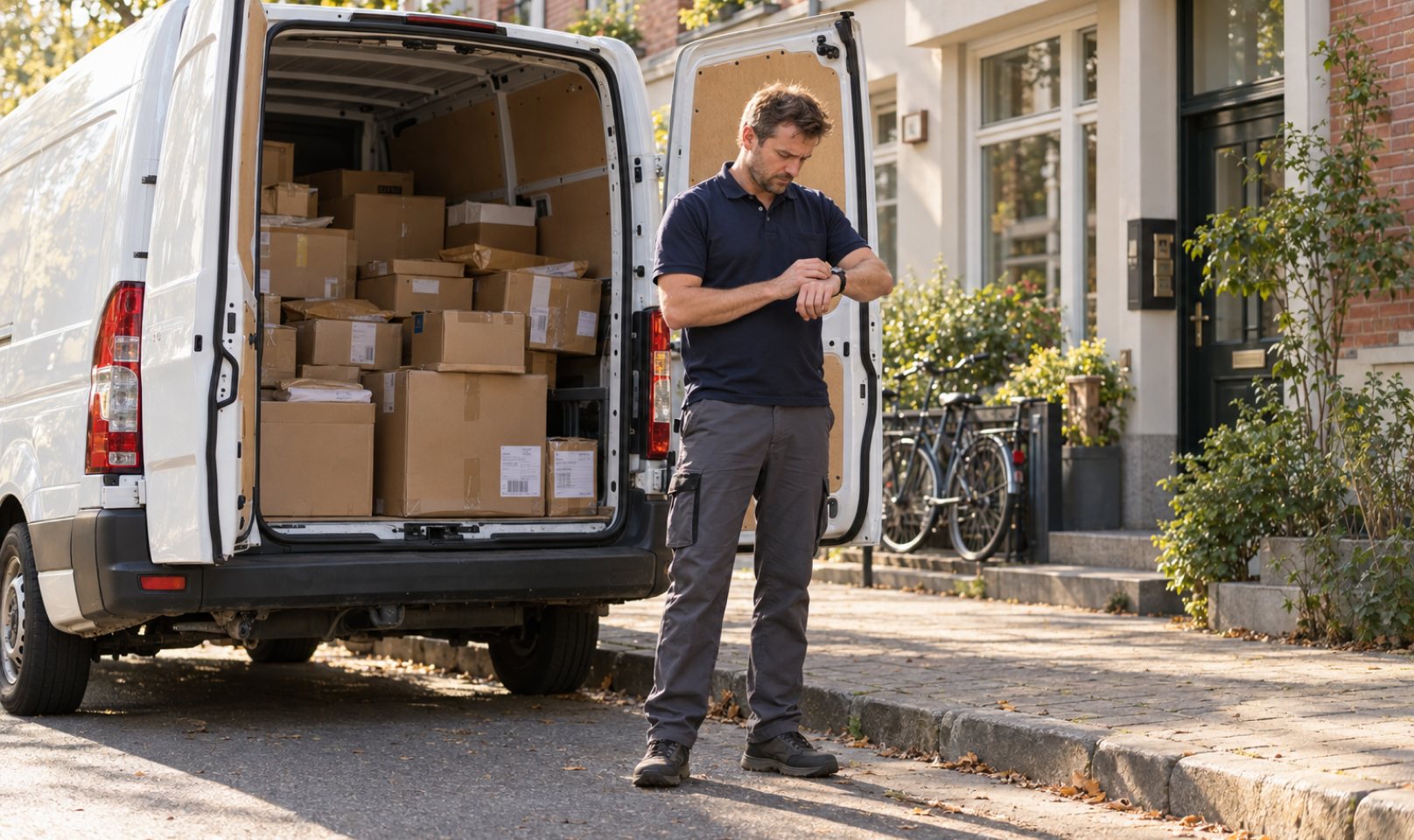
A driver goes quiet for forty minutes. No message, no delay flagged, no reason given. When an app is only built to record completed steps, nobody finds out until the next stop runs late, or the one after that, or a customer calls asking where their order is. The app didn't fail. It was never built to notice in the first place.
An app built to record completed steps operates entirely in the past tense. It has nothing to say about what's happening right now – or what will likely happen later.
A checklist only speaks when it's spoken to
Mark a stop complete, move to the next one, that's the whole job most checklist-style driver apps are built to do. Nothing about that design asks whether a stop is taking three minutes or thirty, whether a vehicle has moved in the last twenty, or whether today is still resembling the plan it started from.
Among the ways this shows up over an ordinary day:
- A stop that's run three times longer than it should have, invisible until the route finishes late
- A vehicle that hasn't moved in twenty minutes, logged the same as one running exactly on schedule
- A delay that reaches the customer only after they've called to ask where their order is
- A dispatcher whose entire view of the day is a list of completed taps, not a live picture of where anyone is
A live system asks questions instead of waiting to be told
When a driver app tracks real location against a real plan, it can notice on its own that a stop is running long, or that a vehicle hasn't moved since the last one, and raise that the moment it happens, not sometime later when someone happens to check. The same signal that reaches the driver reaches a dispatcher at the same time, so a stop that's about to slip becomes something someone can still act on, instead of something explained after the fact.
Among what changes when the app is watching, not just recording:
- A vehicle that stops moving triggers a flag on its own, not a phone call after the fact
- A driver running behind gets a nudge, and a dispatcher gets the same signal, before a customer notices anything
- Dispatch sees the day as it's happening, not a log of taps to review once it's over
- A delivery gets verified by where the vehicle was, not only by what the driver reported
Real information in hand, instead of calling around to find out
One furniture retailer's customer service team used to resolve delivery issues by calling around to piece together what had happened. Once live tracking reached that same team directly, driver location and delivery status visible the moment something changed, they could resolve issues with real information already in hand, before a customer had to explain what was going on.
The takeaway
A checklist tells you what happened. A live system tells you what's happening, while there's still time to do something about it.
Ask how long a stop can run over, or a vehicle sit still, before anything in the system notices on its own. That answer is the real difference between the two.


