.svg)
.svg)


.svg)
.svg)
.svg)
Put logistics operations on autopilot
Automate how order data is enriched, how service rules are applied, how routes are planned and dispatched, and how execution adapts in real time. Run consistent, scalable operations without relying on manual coordination.

.png)
Trusted by operators who own the delivery promise










Designed to reduce manual effort and enforce consistency

Reduce manual work
Let automation handle data preparation, route planning, allocation, supervision, and communications so teams focus on higher-value tasks.

Ensure consistent service
Apply customer- and service-specific logic consistently across planning, execution, and communication to reduce variability.

Absorb operational complexity
Add new requirements, service nuances, and conditional handling without additional staff, parallel processes or fragmented tools.
.svg)
Protect data quality
Standardize how data is enriched, classified, and handled so planning outputs and performance insights stay reliable across your network.
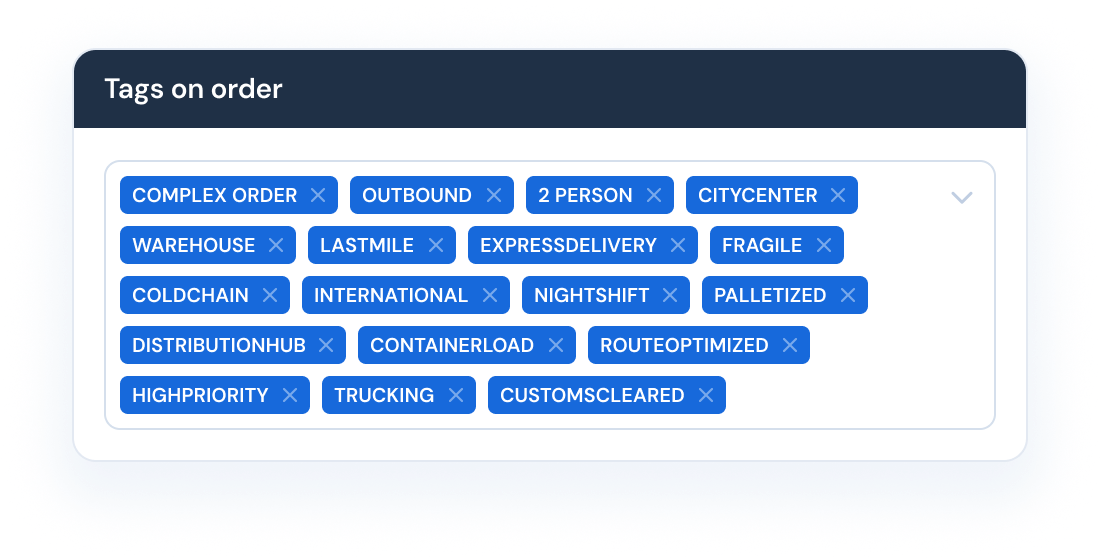
Individualize service rules and automation with tags
Use tags to tailor how orders, routes, customers, and services are handled across your operation. Apply service-specific rules automatically across planning, execution, and communication. Track tagged flows to analyze performance trends and refine how your network runs over time.

.png)
Run logistics operations with less manual effort
.png)
.png)
.png)
Scale operations without losing control
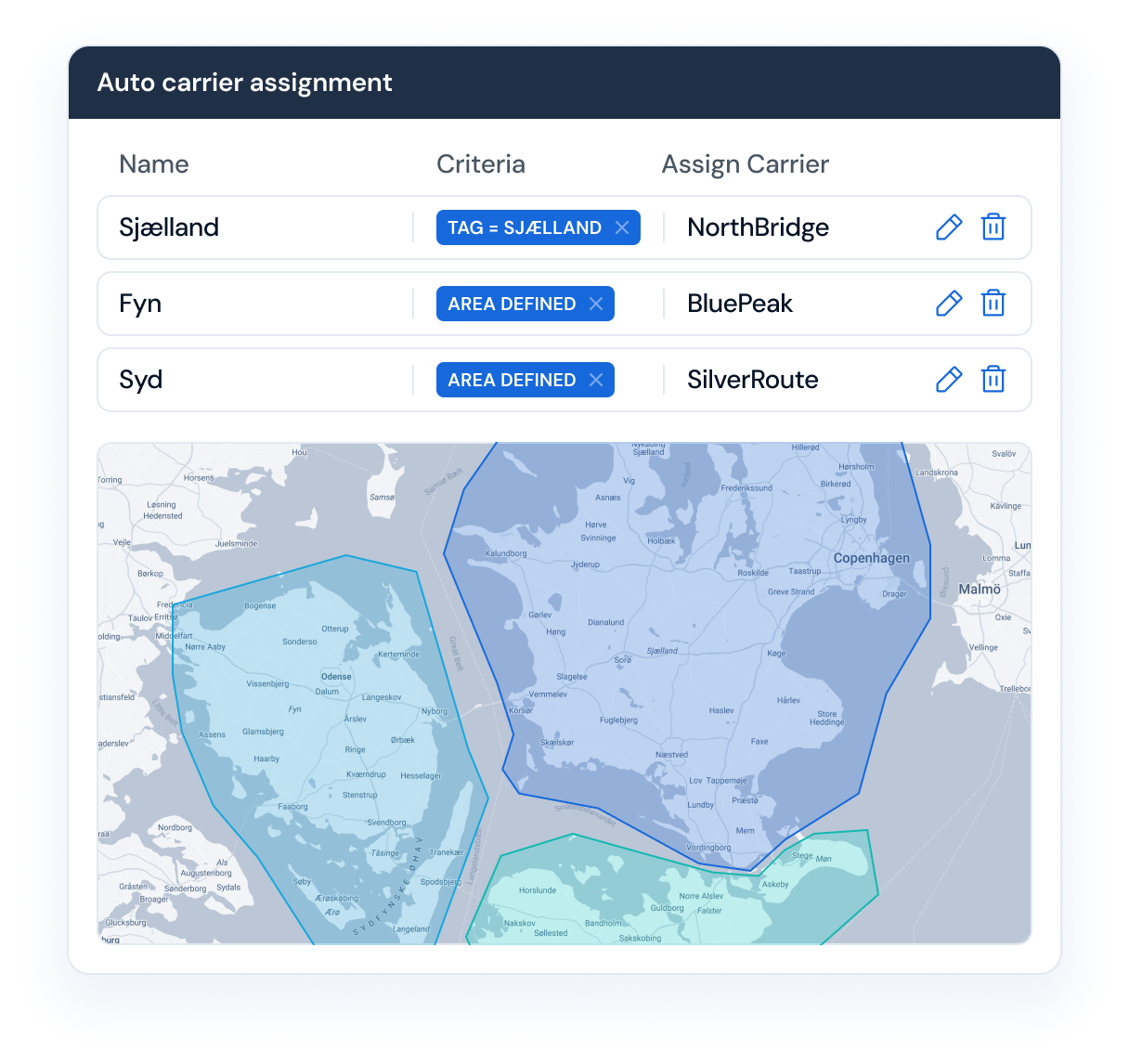
Apply the same rules across regions, warehouses, and teams to reduce variability and protect data quality. Adjust triggers and conditions as operations evolve. Improve performance continuously without interrupting daily work.
Customer stories

.svg)
.svg)
.svg)
%201.svg)

Additional resources
Frequently asked questions
Platform automation is a system-wide capability that allows logistics operations to run through predefined rules, triggers, and conditions. It automates how order data is enriched, how routes are planned, how service rules are applied, and how execution adapts in real time – so teams can reduce routine assignments.
Tags classify orders, routes, customers, and services. Automation rules reference these tags to determine how work is handled. This allows service-specific logic to be applied consistently across planning, execution, and communication.
When events such as order cancellations or delays occur, predefined rules trigger automatic adjustments. Routes, driver instructions, and communications update without requiring manual intervention.
Automation sandardizes how data is enriched, classified, and processed. Consistent handling reduces variability and improves the reliability of performance reporting and optimization insights.
No. Automation separates day-to-day operational execution from optimization. Teams spend less time on repetitive coordination and more time refining rules, analyzing performance, and improving operational workflows.

See Mover in Action
Ready to take control of your distribution?
Talk to our team and see how Mover connects planning, dispatch, drivers and data in one platform – built around how your operation actually runs.