.svg)
.svg)


.svg)
.svg)
.svg)
Fewer exceptions and smoother day-to-day execution
Bring real warehouse constraints directly into route optimization, so departure schedules align with available docks, gates, and vehicle constraints. The result is fewer bottlenecks, less manual replanning, and more predictable departures across your operations.

.png)
Trusted by operators who own the delivery promise










Keep transportation and warehouse operations in sync
.svg)
Executable route plans
Routes are sequenced based on actual dock and gate availability, so shipments can be staged and dispatched as planned.
.svg)
Less manual intervention
Eliminate spreadsheet-based dock planning and post-optimization adjustments.
.svg)
Higher asset utilization
Make better use of docks, labor, and vehicles without overwhelming warehouse operations.
.svg)
Predictable departures
Reduce driver wait time and improve ETAs for carriers and downstream recipients.
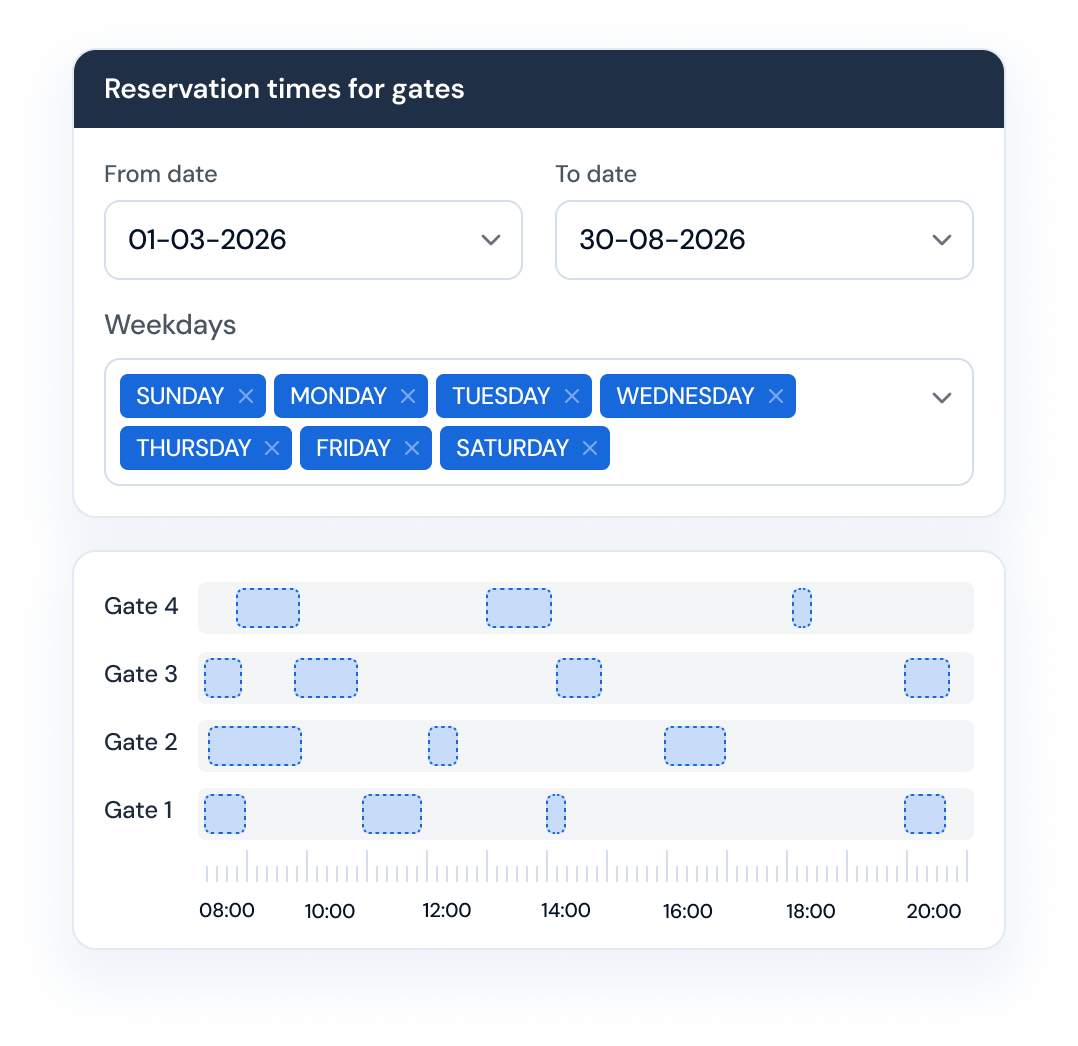
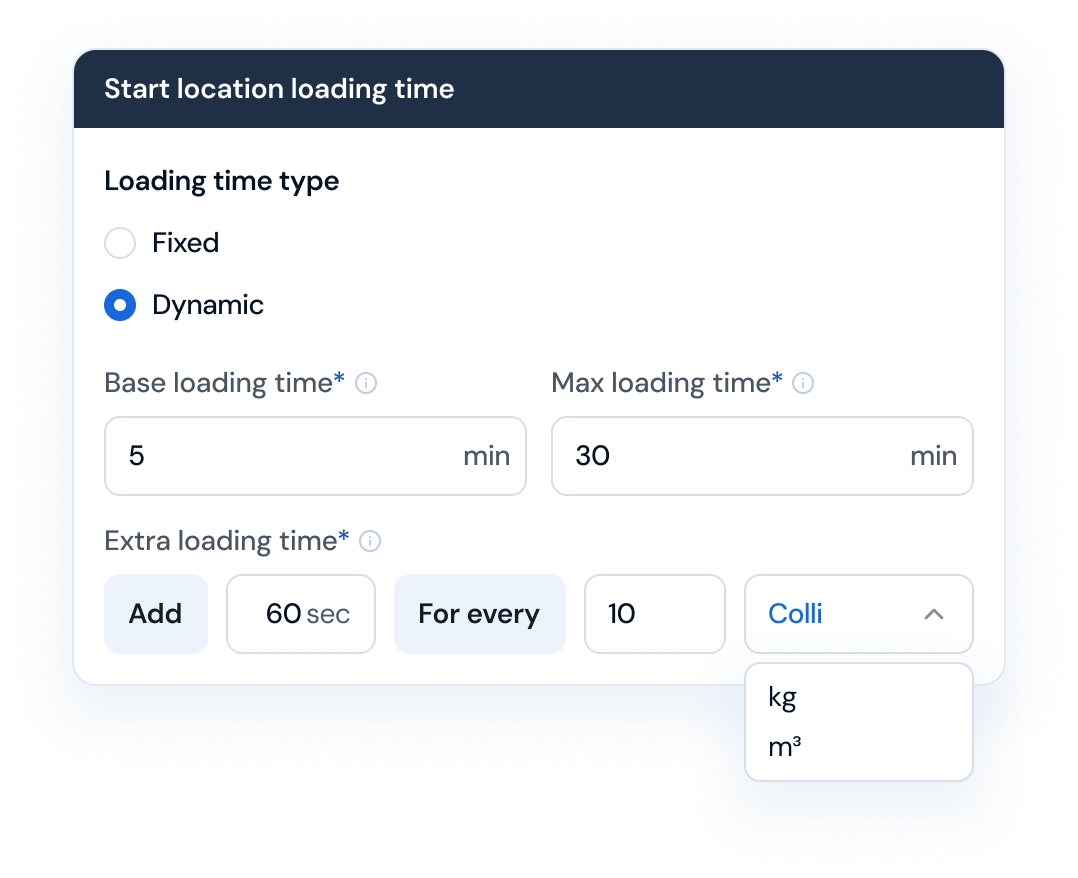
Ensure feasibility from optimization through execution
.png)
.png)
%20(1).png)
Plan with confidence as operations change
Configure dock and gate constraints when they matter, and relax them when they don’t. Planning remains resilient as volumes, layouts, and operating conditions evolve – so teams can make confident decisions without reworking models or introducing complexity.

.png)
Customer stories

.svg)
.svg)
.svg)
%201.svg)

Additional resources

Frequently asked questions
Traditional route optimization focuses on finding efficient routes. Dock and gate planning ensures those routes can be executed by accounting for real warehouse and hub constraints like dock availability, handling time, and vehicle compatibility. Mover has integrated dock and gate planning into the route optimization engine.
No. Dock and gate constraints can be configured at the level that makes sense for your operation, from high-level capacity assumptions to more detailed rules, without overcomplicating planning.
Yes. Dock and gate availability can vary by time of day, day of week, seasons, maintenance windows, or other exceptions, allowing plans to adapt to daily operational realities without manual replanning.
When capacity is constrained, departures are automatically prioritized and sequenced so operations remain feasible and congestion is avoided before execution begins.
No. Dock and gate planning complements WMS by ensuring transportation plans align with warehouse and hub capacity, reducing friction between planning and execution.
Yes. Dock and gate constraints can be applied selectively per planning run, making iteasy to test scenarios, handle exceptions, or plan for peak periods without permanent changes.
This feature is especially valuable for operations with high departure volumes, limited dock or gate capacity, tight labor constraints, or frequent misalignment between transportation plans and warehouse execution.

See Mover in Action
Ready to take control of your distribution?
Talk to our team and see how Mover connects planning, dispatch, drivers and data in one platform – built around how your operation actually runs.