.svg)
.svg)


.svg)
.svg)
.svg)
Route planning that runs itself
Automate route planning, apply your best practices consistently, and keep operations moving without manual intervention.
With scheduled route planning, plans are created automatically and on time – so teams can focus on improving performance instead of racing daily planning deadlines.
.jpg)
%20(1).png)
Trusted by operators who own the delivery promise










Planning that supports growth, not overhead

Spend less time on planning
Enable scale without adding manual workload or increasing planning headcount

Deliver consistent, reliable plans
Keep service levels and cost performance predictable with the same planning approach applied every time

Focus on continuous improvements
Free teams from daily execution work and enable data-driven optimization instead of firefighting.
Built to keep planning on track at scale
%20(1).png)
.png)
.png)
%20(1).png)
Shift focus from execution to optimization
By removing repetitive planning work, route scheduling changes how teams operate.
Planners manage exceptions instead of building routes from scratch. Analysts focus on tuning parameters and tracking performance. Managers spend time improving processes, not firefighting daily plans.
The result is a more resilient operation that improves continuously as volumes grow.
.jpg)
.jpg)
Customer stories

.svg)
.svg)
.svg)
%201.svg)


Frequently asked questions
Route scheduling runs alongside your current workflows by planning automatically at the times you define. Teams can still review, adjust, or approve routes if or when needed, while the system handles repetitive planning in the background.
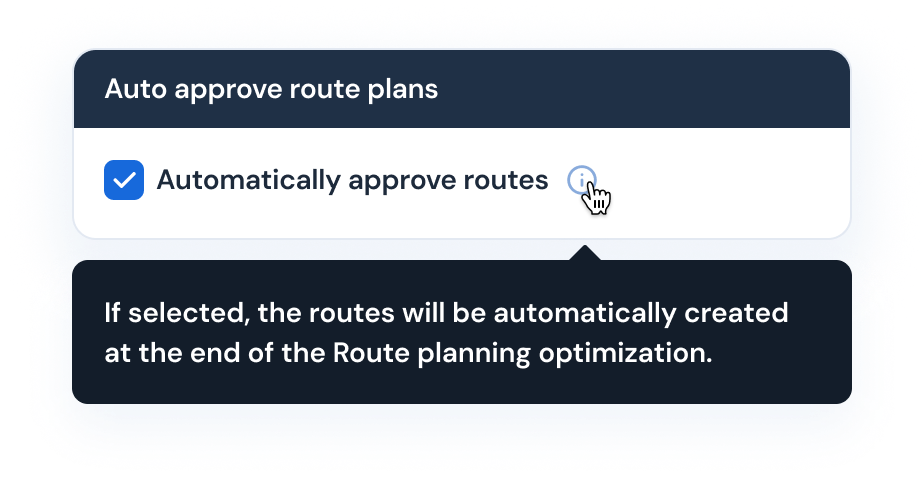
Yes. Automation is configurable and flexible. Schedules can be paused, approvals can remain manual, and routes stay editable after planning – so teams retain full operational control.
Yes. Many teams start by running automation in parallel with existing processes to validate results before fully enabling it. Schedules and parameters can be adjusted over time as confidence grows.
Route scheduling is designed for operations with multiple regions, warehouses, and service models. Independent schedules make it easier to support mixed operations and scale automation without disrupting existing structures.
Routes can be adjusted after planning if priorities or constraints change. Teams can manage exceptions without restarting the entire planning process.
Route scheduling is especially valuable for operations with frequent planning cycles, large order volumes, or tight cut-off times. As volumes grow, it helps teams maintain consistency without increasing planning effort.

See Mover in Action
Ready to take control of your distribution?
Talk to our team and see how Mover connects planning, dispatch, drivers and data in one platform – built around how your operation actually runs.