.svg)
.svg)


.svg)
.svg)
.svg)
Run logistics operations with AI-driven insight
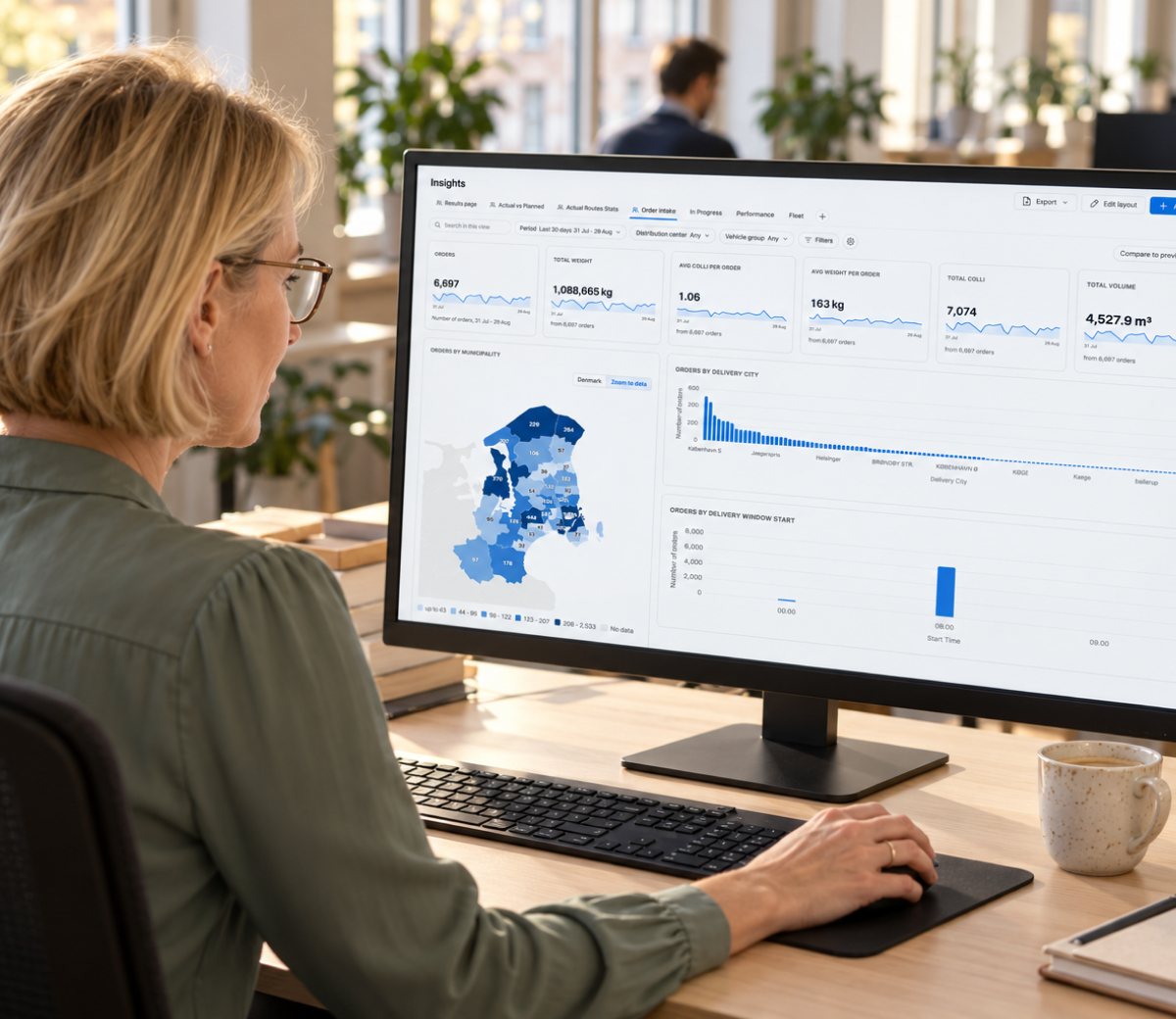
Capture delivery data across routes, drivers, and tasks to gain real-time visibility and uncover performance patterns. Use AI to improve planning accuracy, respond faster to disruptions, and continuously optimize logistics operations.
Trusted by operators who own the delivery promise










Turn logistics data into smarter operations

Improve delivery performance
Identify execution gaps across routes, drivers, and deliveries to continuously improve service reliability.

Reduce logistics costs
Reveal where operational costs accumulate across routes and carriers to control spending and improve efficiency.
.svg)
Monitor operations in real time
Track live delivery activity across routes and drivers to respond faster to disruptions and keep operations on schedule.

Plan operations with AI
Use AI trained on delivery history to estimate task durations and plan routes with greater confidence.
Turn logistics data into operational intelligence


Predict logistics performance with AI
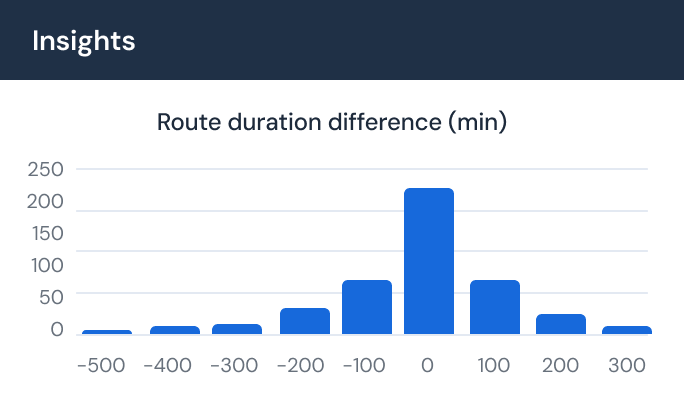
Train AI models on historical delivery and execution data to improve operational predictions. Estimate task durations, detect performance patterns, and plan routes with greater accuracy as the system continuously learns from new operations.

Customer stories

.svg)
.svg)
.svg)
%201.svg)

Additional resources
Frequently asked questions
The Data & AI layer captures operational data across routes, carriers, drivers, facilities, and deliveries and turns it into actionable logistics intelligence. It powers real-time visibility, operational analytics, and predictive capabilities across the platform.
The system records operational events across planning, routing, dispatch, and delivery execution. These events create a continuous data history that reflects how logistics operations actually run.
The platform structures operational signals into consistent logistics entities such as routes, deliveries, drivers, and service tasks. This structured data enables performance analysis, benchmarking, and operational monitoring.
The system streams live operational updates including driver location, route progress, and delivery status. This allows teams to monitor deliveries as they happen and respond quickly to disruptions.
AI models analyze historical delivery and execution data to detect patterns and estimate task durations. These predictions help teams plan routes more accurately and anticipate operational outcomes.
Yes. The platform exposes operational datasets through APIs, integrations, and analytics tools. This allows logistics data to connect with reporting systems, enterprise platforms, and external analysis environments.
By combining operational data, real-time visibility, and predictive AI, the platform helps teams identify inefficiencies, respond faster to operational changes, and continuously improve delivery performance.

CTA subtile example
Call to action banner title example
Lorem ipsum dolor sit amet, consectetur adipiscing elit, sed do eiusmod tempor.