.svg)
.svg)


.svg)
.svg)
.svg)
Move beyond trip - based routing
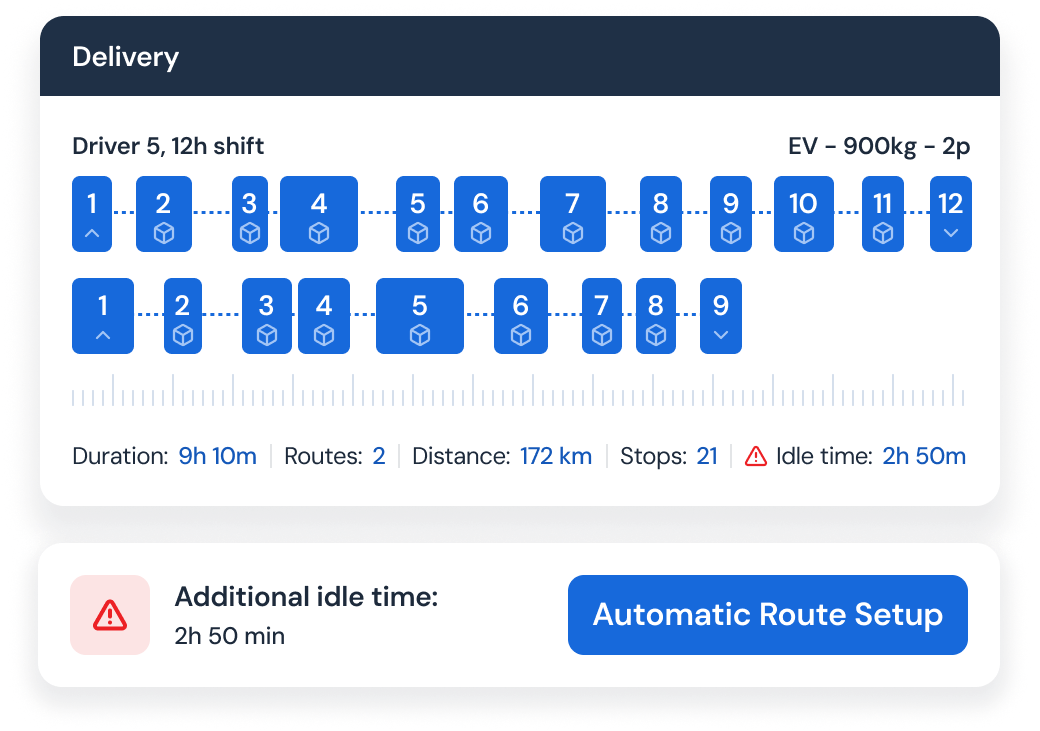
Optimize routes across full driver days, not individual trips. Plan continuous routes that account for capacity limits, depot returns, and working hours as one coordinated shift – so fleets run more productively without added planning effort.
.jpg)
Trusted by operators who own the delivery promise










Built for efficient, compliant operations at scale

Lower operating costs at scale
Reduce idle time and deadhead kilometers across the full shift and keep drivers productive throughout the day.

Free planners from manual route stitching
Replace multi-route planning with shift-level optimization. Reduce planning workload and errors while improving consistency across hubs and regions.

Operate within driver realities by default
Plan routes that respect legal, contractual, and practical shift limits. Meet compliance requirements without forcing planners to micromanage timing and breaks.
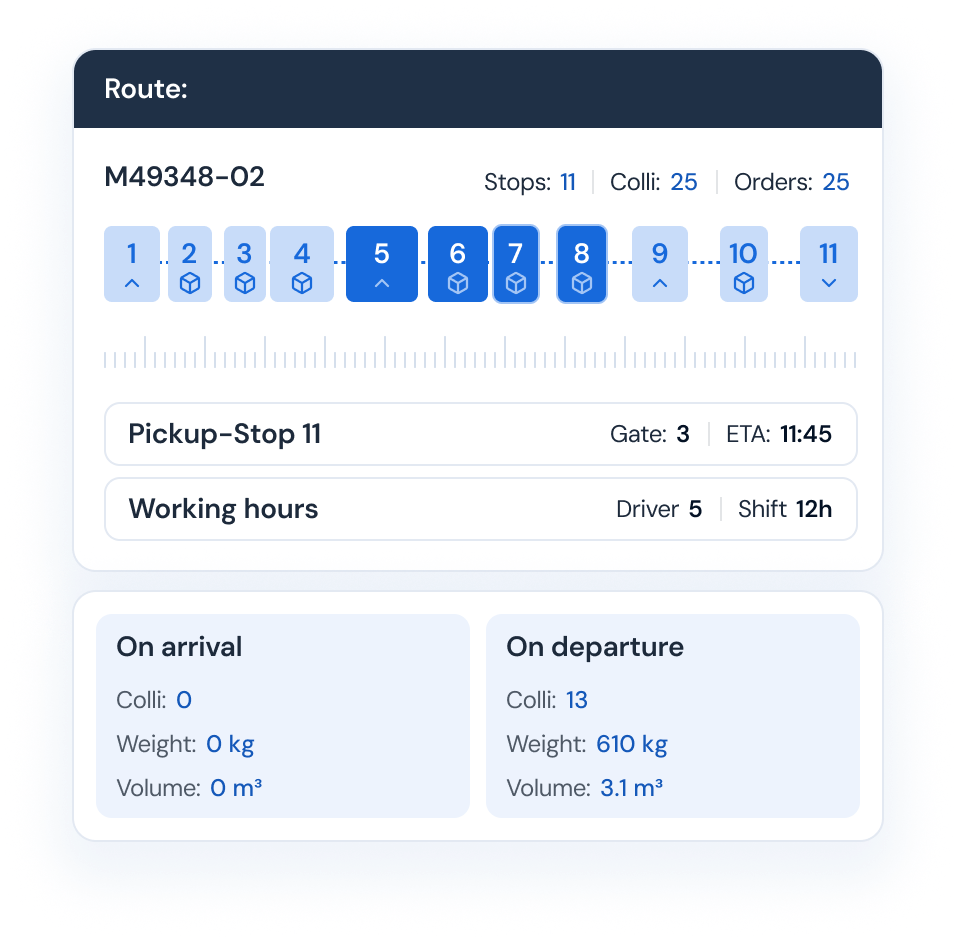
Move from trip-based planning to shift-level optimization
.png)
.png)
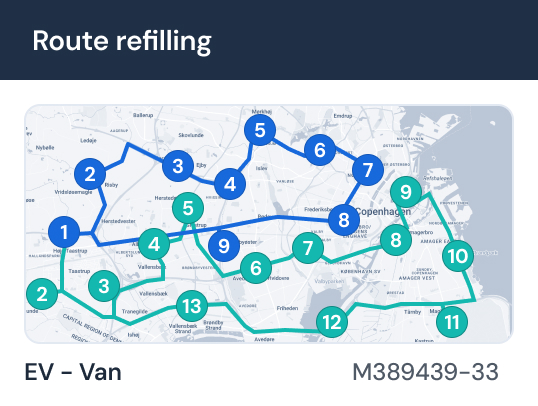
Integrate automated depot returns into continuous route optimization
Handle depot returns built in route optimization, not layered on top. This is not a trivial distinction – it significantly improves your total cost across routes and deliveries. Align route refilling with your downstream execution to support end-to-end automation as fleet mix, driver constraints, and operating conditions evolve.
.jpg)
.jpg)
Customer stories

.svg)
.svg)
.svg)
%201.svg)



Frequently asked questions
Route refilling enables shift-level optimization for capacity-constrained operations. Instead of planning multiple disconnected trips, routes are optimized as one continuous driver day, even when vehicles need to return to the depot to reload or refill.
Yes. Route refilling is built for operations where vehicle capacity, shared depots, and driver working hours are binding constraints. It is designed to support heavy goods, refill-dependent delivery patterns, and multi-depot realities without manual planning or workarounds.
Driver working hours are treated as a primary constraint. Depot returns, refills, breaks, and deliveries are planned within legal and contractual limits by default, without requiring planners to micromanage timing.
Yes. Refilling can be aligned with hub and depot operating hours, loading or charging durations, and allowed refill time windows, ensuring routes remain executable in practice.
No. To ensure optimal route planning, route refilling is built directly into the route optimization. It is a native planning capability, not a separate process layered on top of routing.
Transportation planners benefit from reduced manual planning and fewer errors. Operations leaders benefit from higher vehicle and driver utilization. Drivers benefit from routes that reflect real working conditions.

See Mover in Action
Ready to take control of your distribution?
Talk to our team and see how Mover connects planning, dispatch, drivers and data in one platform – built around how your operation actually runs.