.svg)
.svg)


.svg)
.svg)
.svg)


Every route eventually has to answer the same set of questions. Which vehicle. Which dock slot. Which carrier. Whether the driver is even available. Most operations answer each of these in a different place, a routing tool for the sequence, a spreadsheet for the dock, a phone call for the carrier, a fleet manager's memory for who's on shift. None of it is broken exactly. It is also not one decision, it is several, made by different people, in different places, and reconciled by whoever notices the conflict first.
That reconciliation has a cost. It rarely shows up as a single line item.
The planner becomes the reconciliation layer, and that doesn't scale
When vehicle fit, dock timing, and carrier assignment are solved separately, the connective tissue between them is a person. As route volume grows, the number of connections between these decisions tends to grow faster than the number of routes, so the fix an operation reaches for is more planners, not a better plan.
- Among the signs an operation is paying this cost, planner headcount growing roughly in step with route volume instead of outpacing it.
- The same conflict, a vehicle mismatch or a dock clash, getting resolved by hand more than once in a week.
- Carrier assignment that depends on one person knowing, from memory, who has capacity today.
Dock and carrier decisions made in isolation don't stay isolated
A dock schedule built without knowledge of route assignments, and a carrier allocation built without knowledge of dock timing, will eventually collide, regardless of which one gets planned first. The conflict doesn't disappear when it's caught early, it just moves earlier in the day, onto a different desk.
40+ routes. 10 loading bays. One sequence.
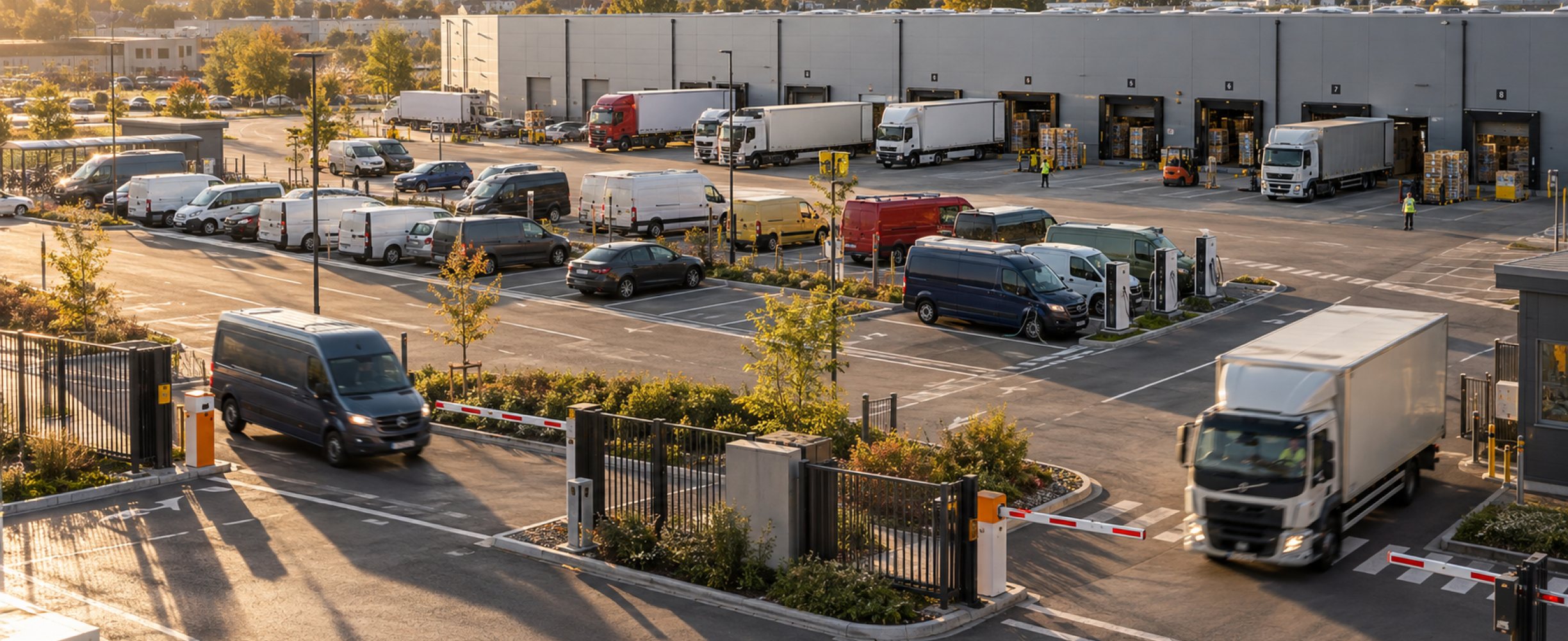
One industrial bakery supplying stores nationwide had more routes competing for dock space than the dock could support at once. Sequencing arrival, loading, and departure as part of route planning, rather than as a separate schedule reconciled each morning, turned a daily bottleneck into a routine that holds up without a person managing it live.
“It used to be a messy operation. Now everything is sequenced.”
— Operations lead, industrial bakery

One planner's Tuesday, five decisions, five places
Consider what it takes to turn a route from a sequence on a map into a truck leaving the dock.
- Build the sequence in the routing tool. Stops and distances are set.
- Check the dock schedule separately, to see which bay is free when the route needs to leave.
- Call around to confirm which carrier has capacity that day, since assignment isn't part of the plan itself.
- Confirm with the fleet manager which vehicles are available, since the routing tool doesn't know what's in the shop.
- Adjust the sequence by hand once two of the first four conflict, which they usually do.
None of these five steps is difficult on its own. Doing all five separately, every day, for every route, is where the cost lives, not in any single decision, but in the reconciliation between them.
This cost doesn't stay in one department
A grocery operation running hundreds of routes a day feels this in planner headcount. A big and bulky operation running mixed internal and contracted fleets feels it in carrier allocation calls that depend on one person's judgment. A direct store delivery operation feels it in a production dock queue that delays every store behind it. The shape of the cost changes by operation. Among operations running enough daily volume for it to matter, the underlying pattern tends to repeat, decisions made apart end up reconciled by hand, and that reconciliation is what stops scaling once the person doing it runs out of hours.
The takeaway
Add up how many separate tools or people it currently takes to turn a route from a sequence on a map into a truck leaving the dock. Each one of those steps is a place cost can hide as volume grows.