.svg)
.svg)


.svg)
.svg)
.svg)


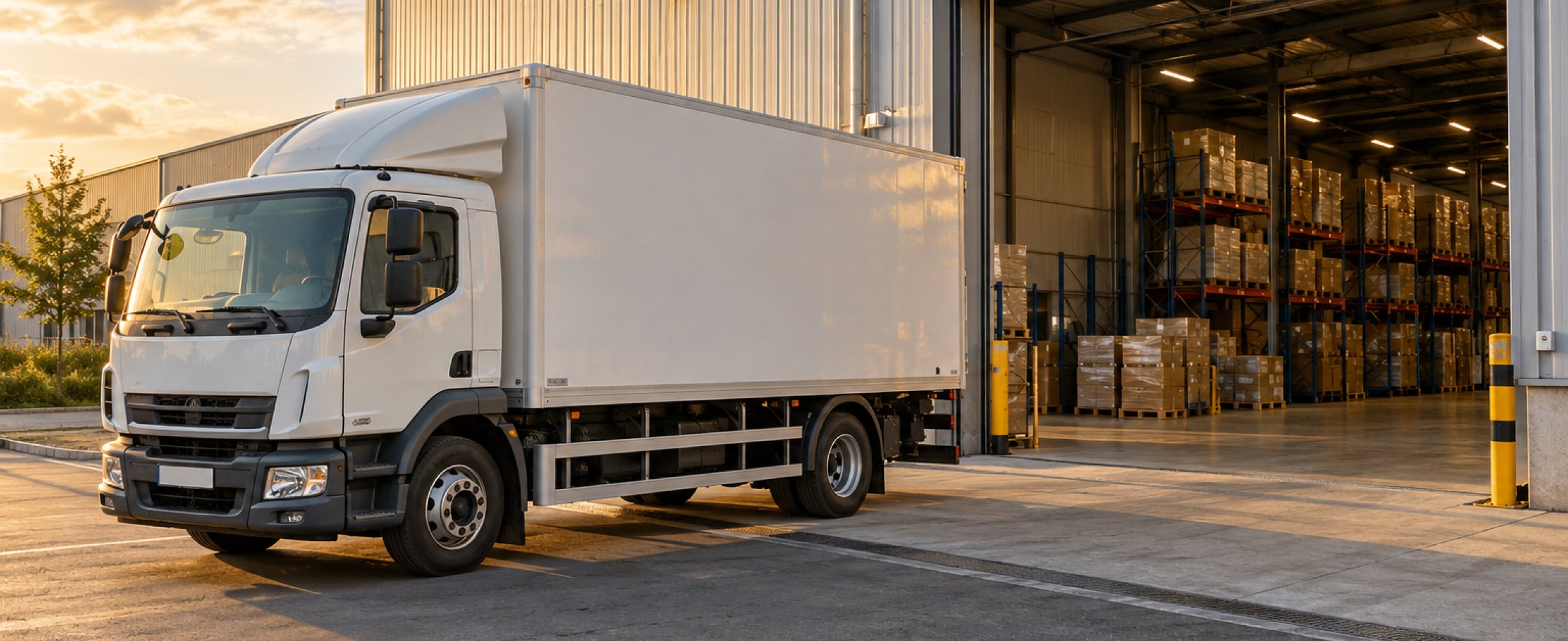
There's a widening gap between what a route optimizer can calculate and how operations execute. Software plans a sequence of stops. Operations run vehicles, docks, task time, and drivers, all at once. When the plan only accounts for the first, the operations and customer support end up solving the rest.
This gap shows up first, and worst, at the dock.
Why the gap exists
Most route optimization tools solve a routing problem, the shortest path, the tightest sequence, the lowest mileage. That's valuable, but it's half the job. The other half is feasibility. Can the vehicle carry the load. Does the dock have room at that time. Does the plan know how long each stop take or is it using a flat average. Is the driver still within legal driving hours. A plan that's optimized on the map but blind to these constraints isn't optimized. It's incomplete, and the gap gets absorbed by whoever's standing at the dock that morning.
Hundreds of routes. Thousands of deliveries. One planner.
One grocery delivery operator brought distribution fully in-house and now runs its entire planning and dispatch operation through automated route optimization, managed by a single person. Efficiency gains showed up immediately and kept compounding as the system learned from thousands of deliveries a day.
Four constraints account for most of the gap between plan and execution.
- Vehicle. Capacity, equipment, and crew requirements have to match the load before a route is assigned, not when they arrive at the dock.
- Dock. Departure timing only holds if it's built against real dock and gate capacity, not a generic schedule.
- Task time. Every stop takes a different amount of time depending on what's being delivered, not a flat average applied to all of them.
- Compliance. Driver breaks, working-hour limits, and EV charging needs are constraints on the route itself, not adjustments made after the fact.
Dock capacity breaks more routes than traffic does
Picture a Tuesday morning schedule. Ten routes are due to leave between 6am and 6.30am. The dock has four bays. On paper, the routes are all optimized, each one takes the shortest path to its stops, each driver is assigned to the right vehicle. What the plan doesn't know is that only four trucks can load at once.
So six drivers wait. Some lose fifteen minutes, some lose forty five, depending on how the queue falls that morning. None of that waiting was in the plan, because the plan was never told the dock only fits four. By 7am the whole day is running behind a schedule that looked perfect at 5am. Planning departures against the dock's real capacity, not a generic time slot, is what keeps that Tuesday morning from happening at all.

Task time is not a fixed average
Many route plans still assume every stop takes about the same amount of time, often a flat five or ten minutes regardless of what's actually being delivered. In practice, task time depends on weight, volume, order type, service complexity, which floor an apartment is on, even finding parking in certain parts of the city. A curbside grocery drop takes two minutes. The same order carried up to a fourth floor takes ten. A furniture delivery that includes assembly takes longer still.
When the plan uses one average for all of it, the route that looked feasible at 7am is running late by noon, not because anything went wrong, but because the plan was built on a task time that was never true for most of the stops on it. Every stop that runs long pushes every stop behind it later, and by the afternoon the delay has nowhere left to hide.
“It is very valuable that the system is designed for complex logistics operations.”
— Distribution manager, grocery delivery operator
A single route, four failure points
Take one route, mid morning, still running on schedule.
- The vehicle arrives at stop four and can't fit the remaining load in the compartment it was assigned. The order was heavier than the average the plan used, and now three items meant for later stops have to be repacked around it. A planner reshuffles by phone while the driver waits at the curb.
- The task time at stop six runs three times longer than planned. It's a two person installation the plan priced as a standard drop off, and the driver is working it alone.
- The dock the vehicle is due back at for a reload is already at capacity for the next loading window. The driver waits again, this time for a bay to open up rather than a repack.
- The break the driver was due to take twenty minutes ago hasn't happened, because the plan didn't build it in. It happens now, mid route, wherever the truck happens to be, pushing every remaining stop later.
By early afternoon, a route that started on time is running well behind, and not one of the four causes was a routing mistake. Each was a constraint the plan should have accounted for before the truck left the dock.
This isn't a grocery specific problem
The same gap shows up anywhere routes carry real vehicles, real docks, and real drivers. In big and bulky delivery, a missed crew requirement means a two person job gets attempted by one driver. In direct store delivery, a dock queue at the production site delays every store on the route behind it. In mixed EV and diesel fleets, a route planned without charging time built in either misses a charge or misses a delivery window, it can't do both. The constraints change slightly by industry. The failure mode doesn't. A plan that only sequences stops will always leave someone at the dock, the curb, or the charging station, to solve the rest.
The takeaway
List the constraints that break your routes today, vehicle, dock, task time, driver hours, EV range. Then check whether your planning tool builds around them automatically, or leaves you to catch the problem after the truck's already loaded.