.svg)
.svg)


.svg)
.svg)
.svg)


Checkout usually offers two delivery paths, ship it to an address, or come get it from a store. A customer without a car, or too far from the nearest location, doesn't have a real version of either. Shipping can cost more than a small basket is worth. The store might be an hour away with no easy way to get there. That customer doesn't complain. The browser tab closes, and that's the end of it.
The lost sale doesn't look like a delivery problem. It looks like a customer who didn't want the product enough.
Two delivery options, and a customer who fits neither
Picture a customer forty minutes from the nearest store, without a car, ordering something too bulky to justify a shipping fee that costs more than the item is worth. Checkout offers two choices, pay for shipping that erodes the order's value, or get to a store with no real way to reach it. She closes the browser instead, and nothing about that moment gets logged as a delivery failure. It gets logged as a visit that didn't convert.
That customer isn't rare. A meaningful segment, rural, low-density, or urban without a car, sits outside both standard paths every day. This isn't a pricing objection a discount would fix. It's a fulfillment option that was never offered, and it shows up as lost conversion, not as feedback.
A third option costs a stop, not a store
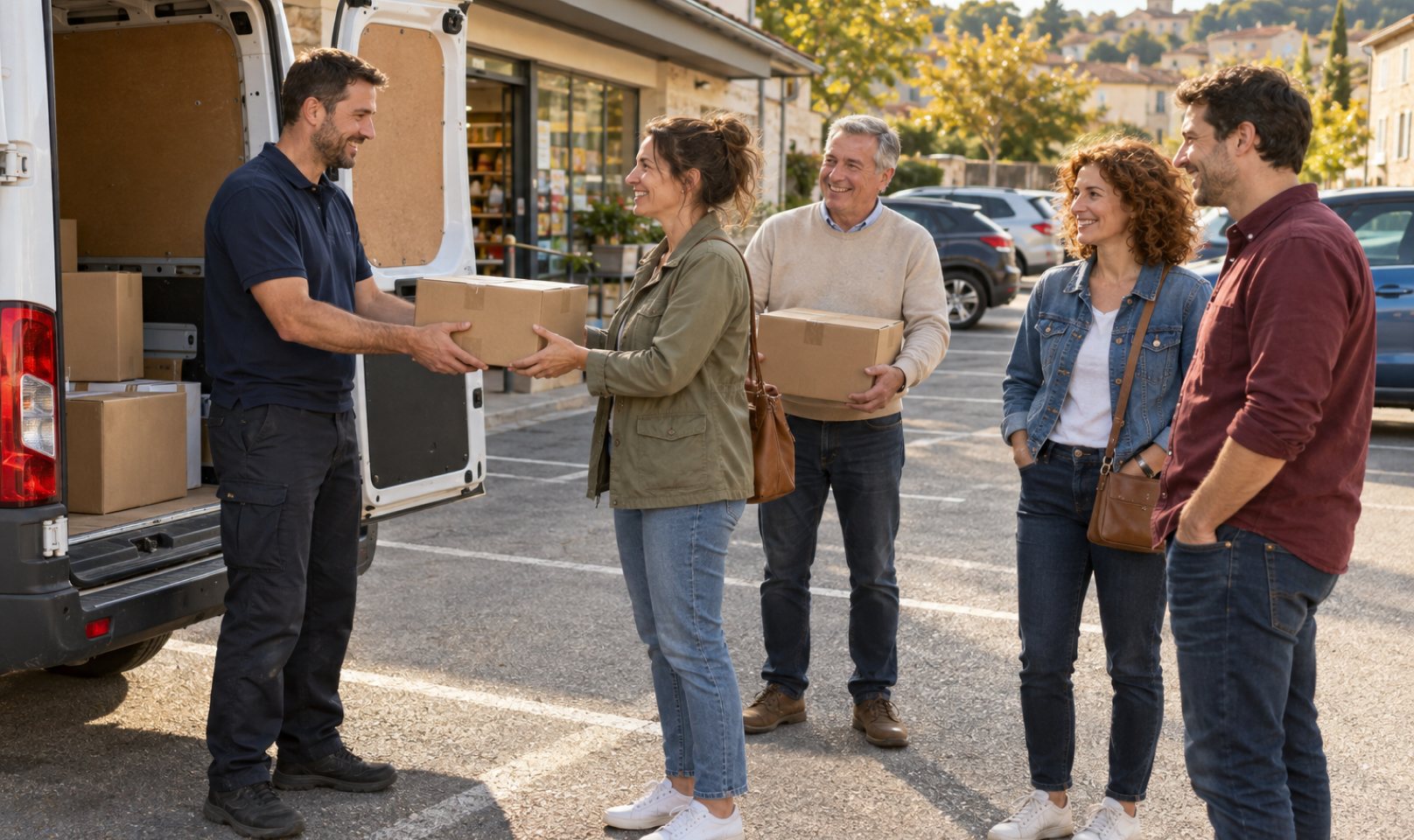
A route already scheduled to deliver shipments can also carry orders for a cluster of nearby customers with no workable delivery option of their own. The vehicle parks at a fixed location, a spot near a gas station or a supermarket, for a scheduled window, and customers in the area are notified to collect directly from it. This isn't a dedicated trip or a new location. It's one stop, with a dwell-time window, planned into a route the vehicle was already running.
The alternative costs the same every day, whether anyone needs it or not
A fixed collection point, a locker, a staffed counter, a small local depot, is a standing cost, rent, presence, upkeep, paid every day it exists. The demand behind it might show up once or twice a week. A vehicle-based collection point only costs something for the window it's used, since the location is a stop on a route that was running anyway, not a facility kept open on the other five days for nobody. Building permanent presence to capture an occasional slice of checkout traffic rarely pays for itself. Not building anything means walking away from that traffic completely.
Bulky goods fit a vehicle. They rarely fit a locker.
Fixed collection infrastructure is typically sized for parcels, a wall of lockers, a counter, a small footprint. Bulky or non-standard goods don't fit that model well. A vehicle-based collection point handles this naturally, since the storage is the vehicle itself, not a fixed-size box. For an order too large to ship cheaply and too far to justify a special trip, the vehicle is the only workable middle ground checkout has to offer.
This depends on a kind of planning most delivery setups don't have
Ship or visit a store aren't the only two ways to receive an order, they're the two options a system built around fixed infrastructure or simple point-to-point delivery defaults to. A third option like this depends on route-level dwell-time planning tied into the same app a driver already uses for regular stops, not a locker network or a satellite counter bolted on separately. That's a different kind of capability to build, which is why the customer segment it serves often gets left out of checkout by default, not by any deliberate decision.
The takeaway
Look at how much of the addressable market has no real version of either delivery option at checkout, no car, no nearby store, a basket too small to justify shipping cost. That segment isn't a pricing problem. It's a fulfillment option that doesn't exist yet.